K 11 (Henggu) up to K 27 (Shufu), GV 4 (Mingmen) (confluence of energies of several Extra Meridians).
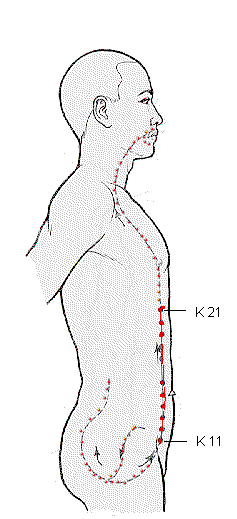
Chong Mai:
• character: Central reservoir of the Xue (Blood) and Jing (Essence) in the body. The name can mean "passing through" (Matsumoto). This suggests a pathway, wherein sexuality is defined, cultivated and transformed. Most of its symptoms involve the sexual systems of both sexes. Esoterically, it is the street one travels to gather and transmute Qi and Jing (Essence). Abnormally, leakage and weakness of the genitals occurs. When the Qi is cultivated through, these same fluids can be used to rejuvenate one's internal organs rather than being spent in excessive sex and reproduction. Blockages in this channel occurs easily, preventing the flow of transformative and regenerative essences. Liver Stagnation is often due to Chong Mai blockages, which be located by abdominal palpation (Seem). Intimately associated with GV-4 (ming men) and Sp-6 (san jiao) (Matsumoto).
• Master point: Sp-4
• Couple point: PC-6
• paired channel:Y in Wei Mai (Yin Linking Vessel)
• functions: Sea of Xue (Blood), regulates menstruation; Sea of the Twelve Channels, source of Qi for the channels; governs sexual characteristics; connects Pre- and Post-natal Qi; controls life cycles; governs reproduction; affects the gastrointestinal system and heart.
• general symptoms: adverse flow of Qi; heart and chest disorders due to Stagnation of Qi and Xue (Blood); gastrointestinal problems; abdominal pain; reproductive disorders; menoxenia; infertility
• Shi (Excess) symptoms: deficient lactation; impotence; menstrual irregularities
• Xu (Deficiency) symptoms: contracture; pain; prostatitis; urethritis; orchitis; seminal emission; metrorrhagia; menorrhagia; hematemesis
Therapy points (CHONG MAI):
- Key point: Sp 4 (Gongsun).
- Key point of the coupled meridian: P 6 (Neiguan).
- Point of departure: CV 1 (Huiyin) (dorsal branch).
- Reunion points: CV 4 (Guanyuan), S 30 (Qichong), S 25 (Tianshu),
K 11 (Henggu) up to K 27 (Shufu), GV 4 (Mingmen) (confluence of energies of several Extra Meridians).
Functions (CHONG MAI):
Creative functions:
— the internal 'organization' of life.
— related to the source of life, determines the life-plan and life- span.
— the most important mutations with regard to procreation (genetics,
embryology).
— 'Sea of the uterus and XUE' (relationship to creative processes).
— 'Sea of the 12 meridians' (coordination).
— 'Sea of YUAN QI'.
— 'the foundation of the Triple Energizer' (related to the maintenance of life).
— 'the foundation of the ZANG FU.
— CHONG MAI (and DAI MAI) are activated at conception.
Regulative functions
— governs and coordinates the most important transformations (mutations) of
the body: digestive, respiratory, hormonal, metabolic, genital (menstrual cycle), sexual, spiritual, etc.
— regulates the circulation of XUE and QI (ancestral, WEI, YING): in this way it
regulates body temperature.
Symptomatology (CHONG MAI):
gynecological symptoms
:— menstrual disorders, organic gynecological disorders: fibroma, cysts,
inflammation, etc...; sterility: 'the pathway of conception is interrupted'; genital and sexual disorders: pain, swelling or itching of the vagina; also in men: ailments of the penis, scrotum or prostate; pain in the pelvis extending to the Heart (according to SU WEN), impotence, frigidity.
— abortions, abnormal labor or childbirth, embryological pathology, difficult
childbirth, retention of the placenta.
— pathology of puberty and menopause (mutations).
digestive symptoms:
— fullness and oppression in stomach and thorax; ascending energy from the
abdomen; nausea and vomiting of undigested food; diarrhea; blood in the
stool; FENG (Wind) in the intestines; hiccup, swollen flanks, abdominal pain (acc. to DA CHENG).
lumbar symptoms:
— (dorsal branch of CHONG MAI) acute lumbago (band-like at the level of the
2nd lumbar vertebra) due to lifting of heavy objects, preventing the trunk bending forward or backward (B 37, B 38, B 39); stretching the back disturbs equilibrium.
thoracic symptoms:
— oppression, dyspnea, precordial pain.
facial symptoms:
— (facial branch) angina, dry mouth, dry nose, loss of voice (after childbirth).
symptoms of the lower limbs:
— cold feet and lower legs (up to the knees); pain or cramp in the medial
aspect of the leg; painful groin.
general characteristics of a patient with CHONG MAI symptoms:
— marked tiredness (deep, internal), fear: does not dare, no zest for living, deep
grief, severe depression, YANG deficiency + insomnia (tired but unable to go to sleep), premature aging, 'the QI cannot open'
Principal symptoms (CHONG MAI):
abdomen - pathology of the hypogastrium due to disturbances of XUE (material); pain in the pelvic area, extending to the heart (acc. to SU WEN).
abortion
asthenia - exhaustion
premature aging.
anxiety
backache - lumbar
very acute when lifting heavy objects (stagnation of XUE); horizontal, band-like or obstructed feeling; patient is unable to bend forward or backward; stretching disturbs equilibrium (B 37).
depression
deep; severe suffering; 'QI can not open'.
dyspepsia
all digestive complaints; food and alcohol are not digested, hiccough, diarrhea ... (acc. to DA CHENG).
fear
no guts.
feeling cold
especially in the lower limbs; also psychological.
foot - cold
and lower leg up to the knee.
genitals - bleeding
genitals - pain
spasm / inflammation of the uterus; pain in penis and/or testes.
genitals - prolapse
genitals - tumor
cyst, fibroma
leg - cold
cold feet up to the knees.
menopause
mutational disorders, ascending energy.
menses - irregular
menses - pain
premenstrual tension
sexual function - disorders
frigidity.
speech - disorders
loss of voice after childbirth.
sterility
'the pathway of conception is interrupted'.
Secondary symptoms (CHONG MAI):
abdomen - distension with ascending energy.
abdomen - pain
fullness and oppression in the stomach; vomiting.
abdomen - pain - flank swollen.
abdomen - pain - stomach
abdomen - spasm of the colon due to disturbances of XUE or of the QI/XUE balance.
abdomen - stomach complaints
fullness and oppression in the stomach; vomiting.
Arteriosclerosis
asthenia
tired but unable to sleep; deficient YUAN; no guts.
back - mobility disorders
borborygmus
FENG (wind) in the intestines.
breasts - swelling
diarrhea
dyspnea
dyspnea - asthma chronic
energy rising
pain and feeling of heaviness in the abdomen with ascending energy.
flatulence
genitals - swelling
penis; prostate; vagina.
hiccough
according to DA CHENG.
insomnia
tired but unable to sleep (deficient YANG + insomnia).
leg - arteriovenous insufficiency
leg - pain - medial
leg - spasm
especially on the medial side.
leg - varices
lips - swelling
menses - delayed period
menses - heavy period
menses - scanty period
mouth - dry
dryness in nose and mouth.
nausea
prostatitis
speech - hoarseness
loss of voice after childbirth.
stool - blood-stained
according to DA CHENG.
syncope
e.g. after childbirth.
thorax - fullness
oppression of the chest.
thorax - pain - anterior
precordial pain.
throat - chronic tonsillitis
throat - pain
sore throat.
thyroid gland - struma
Tongue - dry
urination - dysuria
urethritis.
vagina - itching
vagina - pain
vomiting
of undigested food.
Dai Mai:
• character: Dai means girdle, suggesting its horizontal direction, as well as the nature of the support it gives the other channels. As it wraps the middle of the body, the Dai Mai's main symptoms express a failure of the proper flow of Qi between the two halves it connects.
• Master point: GB-41
• Couple point: TW-5
• paired channel: Yang Wei Mai (Yang Linking Vessel)
• function: binds channels running through the trunk, thus all channels connect with the Dai Mai; regulates balance of Qi between the upper and lower body
• general symptoms: menstrual headache; abdominal distension; leukorrhea; dysmenorrhea; uterine prolapse; ovarian cyst; weakness of the lower back; hip arthritis; paralysis of legs
• Shi (Excess) symptoms: Shi (Excess) of the Yang channels; lumbar or loin pain; weakness of upper extremities; unilateral weakness in eye, breast or ovary
• Xu (Deficiency) symptoms: weak loins or lumbar; "feels like [patient is] sitting in water; pain in opposite shoulder, eye, breast or ovary; abdomen distention
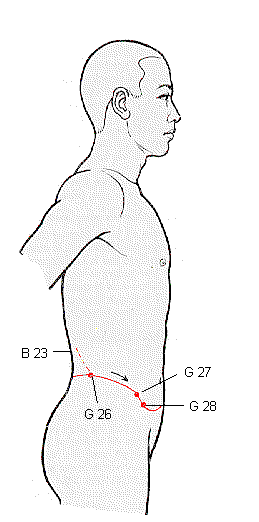
Functions (DAI MAI):
Creative functions:
— joins man with the cosmic 'ORDER', the laws of the universe which govern
life.
— gathers together and directs the energies of an individual.
— gives moral strength, strengthens the role of a person in the universe : makes
an individual resolute.
Regulative functions:
— mobilizing action (SHAO YANG) on different YIN aspects: XUE, JIN YE (Body
Fluids), solid substances (e.g. stool), lower part of the body, lower limbs...
Symptoms (DAI MAI):
gynecological symptoms:
— leukorrhea; painful, irregular menses, menses with delayed period or coming
through with difficulty, spasm; lactation problems.
digestive symptoms:
— distended abdomen, spasm, constipation.
symptoms of the lower limbs:
— weakness, paresis, edema; frequent spraining of the ankle; pain in the joints
and bones; cold feet.
symptoms of the loins:
— girdle-like lumbago, sometimes extending to the medial side of the thighs.
symptoms of the upper part of the body:
— SHAO YANG complaints: pain in the head, eye, shoulder, arm, chest and
flank.
general characteristics of a person with DAI MAI symptoms:
— people with a lot of energy which is not directed: a lot of projects, studies,
relationships, etc...; very dynamic but dissipated people; have different
practitioners at the same time; like to have a lot of people around them; morally weak, they lack a centre.
Principal symptoms (DAI MAI):
abdomen - hardness
abdomen - pain due to stagnation of YIN/XUE.
abdomen - pathology of the hypogastrium
pain due to stagnation of YIN/XUE; pain and stiffness in legs after coitus.
agitation
dynamic person with no goal in life.
ankle - pain
weak ligaments; spraining.
backache - lumbar
girdle-like pain, renal pain.
breasts - lactation
poor milk production; all disorders related to breast feeding.
breasts - pain
congestion or mastitis.
constipation
foot - cold
and swollen.
genitals - prolapse
leg - heaviness
poor XUE circulation in the lower part of the body.
leg - weakness
'walks as if wading through water'.
menses - pain
spasm in lower abdomen.
premenstrual tension
vagina - leukorrhea
Secondary symptoms (DAI MAI):
abdomen - distension due to constipation or stagnation of YIN.
abdomen - spasm of the colon
pain due to stagnation of YIN/XUE.
emotional disorders
morally weak.
flatulence
foot - pain
weak ligaments; feeling of heaviness.
genitals - cervicitis uteri
headache
imbalance of YIN (below) and YANG (above).
headache - lateral
SHAO YANG headache.
irritability
leg - arteriovenous insufficiency
leg - paralysis
paresis, without strength.
leg - swelling
edema (stagnation of YIN).
leg - varices
poor XUE circulation.
menses - delayed period
muscle - spasm
cramp (cf. SHAO YANG).
muscle - tension
neck - tension
vertigo
Du Mai:
• character: Controls or governs the function of the Yang channels. When Yang is Shi (Excess), the controller absorbs this surplus. This Qi overload can affect the mind and nervous system with erratic symptoms. A weakness can result in lowered immunity and weakness of many Yang functions. In contrast to the Ren Mai, this channel impacts function more than substance, exerting its influence over musculoskeletal and sensory activity, as well as expelling pathogens.
• Master point: SI-3
• Couple point: UB-62
• paired channel: Yang Qiao Mai (Yang Motility Vessel)
• functions: Sea of Yang (channels); home to the Brain and Kidney; affects mental and reproductive functions, spine, nerves, and cerebrospinal fluid.
• general symptoms: hysteria; syncope; headache; opisthotonos; low back pain
• Shi (Excess) symptoms: hallucination; Shen disorders; seizures; opisthotonos; headaches; stiff spine
• Xu (Deficiency) symptoms: weak character; lack of strength; heavy head; sterility; impotence; hemorrhoids
The Course of the DU MAI:
a) The DU MAI originates in the uterus and descends to merge at the perineum.
b) It then ascends along the posterior middle line, following the spinal column
from Changqiang (GV 1), the first point of the meridian, to Fengfu (GV 16) at the nape of the neck where it enters the brain, its pertaining organ.
c) It further ascends to the vertex and winds along the forehead to the columella
of the nose, where it descends to Ying-jiao (GV 28) at the end of the gingiva.
d) It meets the REN MAI at Chengqiang (CV 24).
e) The posterior branch emerges from the perineum, winds around the anus,
ascends along the internal aspect of the spinal column and enters the kidney.
f) The anterior branch starts from the perineum, winds around the external
genitalia, ascends to the middle of the umbilicus, passes through the heart
and goes up to the throat and mouth.
g) It winds around the lips and ascends to link with the eye.
h) Another branch emerges from Jingming (B 1), travels upward to the forehead
and the vertex, before descending to Fengfu (GV 16) where it enters the brain.
i) Emerging once more, it descends from the lower part of the nape of the
neck to Dashu (B 11) and Fengmen (B 12), continuing to the lower back where it links with the kidney.
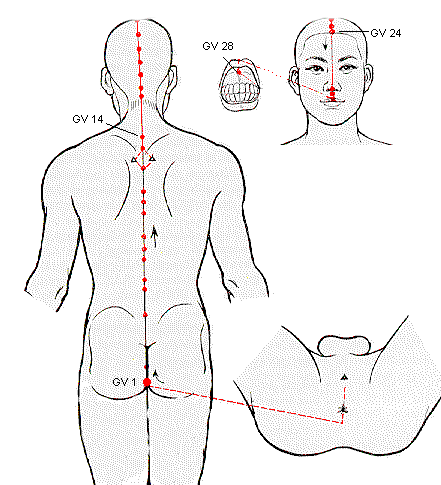
Therapy points (DU MAI):
- Key point: SI 3 (Houxi).
- Key point of coupled meridian: B 62 (Shenmai).
- Point of departure: GV 1 (Changqiang).
- Reunion points: GV 2 (Yaoshu) to GV 28 (Yinjiao).
Functions (DU MAI):
Creative functions:
— represents the YANG support structure of man: the YANG which supports life:
the ORDER in life which governs the physical, psychological and spiritual balance; DU MAI covers both the mind, intellect and character of man and the YANG aspects of his mind.
— governs the YANG contacts with the outside world (if these contacts are
interrupted: epilepsy; if disturbed: dementia).
— gives man a (YANG) boundary, for instance through the name given to him or
her: before a name is given a child possesses all possibilities; as soon a
name is given his possibilities are restricted (cf. the TAO which can not be 'named').
Regulative functions:
— summary of all the YANG aspects of an organism:
all YANG phenomena resonate with DU MAI.
— 'Sea of the YANG meridians': they are all connected to DU MAI.
— nourishes the brain and spinal marrow.
— relationship to Kidney YANG, Ming Men, Gate of Light, primordial Fire,
Pre-Heaven.
— restricted role in the defense against P.E.: FENG (GV 16).
Symptomatology (DU MAI):
spinal symptoms:
— superficial pain (vertebral or paravertebral), stiffness, scoliosis (lateral
curvature of the spine); kyphosis (convexity in the curvature of the thoracic spine): due to deficiency; lordosis (forward curvature of the lumbar spine): due to excess; meningitis.
symptoms of the psyche:
— epilepsy, mental disorders, hallucinations, overexcited (moves like a
madman), dementia, depression, insomnia, character defects (due to deficiency).
head symptoms:
— pain (excess) or feeling of emptiness (deficiency); vertigo; pain in the occiput
and neck; encephalitis.
pelvic symptoms:
— sterility, constipation, urinary complaints, pain in the hypogastrium.
symptoms of the extremities:
— cold limbs, paresthesia (use moxa on GV 4).
general characteristics of a person with DU MAI symptoms:
— asthenia due to deficient YANG; no get-up-and-go, 'unable to confirm
oneself': without identity, does not possess a real name; spineless, rounded back, lack of strength, weak character; often in combination with 'Stagnation and accumulation of Liver QI': overall tightness, muscle pain (especially in the shoulder girdle), fear, trembling tongue, wiry pulse (K 21).
Principal symptoms (DU MAI):
anus - hemorrhoids
asthenia
lack of strength, both physical and mental; general deficiency of YANG.
back - stiff
all sort of back complaints, stiff spine.
back - weakness
poor posture, unable to keep himself straight.
backache - sacro/coccygeal
backache - spinal
or paravertebral; kyphosis, scoliosis, vertebral complaints, brachialgia; 'warm feeling in the middle of the back'.
behavioral disorders
weak character; cf. function of DU MAI.
consciousness disorders
convulsions
important relationship to the SHEN (GV 26).
depression
no spunk.
epilepsy
important relationship to the brain and endocranium (B 1, B 7 and GV 16).
headache
pain in the case of excess; feeling of emptiness in the case of deficient DU MAI.
insomnia though there is deficient YANG.
neck - pain especially at the level of the 7th cervical vertebra (according to Da Cheng).
neurasthenia
no backbone; all sorts of mental disorders.
sterility
Secondary symptoms (DU MAI):
abdomen - pathology of the hypogastrium
pain, urinary complaints (longitudinal LUO of DU MAI).
agitation
walking around like a lunatic.
anus - incontinence
back - mobility disorders
back - spinal curvature
backache - dorsal
vertebral or paravertebral.
backache - lumbar
vertebral or paravertebral.
constipation
emotional disorders
eye - pain
according to Da Cheng.
fear
no backbone; all sorts of mental disorders.
four limbs - cold
moxa on GV 4.
hallucinations
hand - paresthesia
paresthesia if the 4 limbs: moxa on GV 4.
heart - pain
severe back pain extending to the heart (GV 9).
hypochondria
leg - paresthesia
paresthesia of the 4 limbs: moxa on GV 4.
madness
muscle - stiff
muscle - tension
neck - tension
urination - pain
urinary complaints (longitudinal LUO of DU MAI).
wind pathogenic QI (GV 16).
Ren Mai:
• character: The name of this channel suggests obligation and responsibility, thus its association with menstruation and childbearing. It nourishes the Yin channels. Just as the mother nourishes the fetus, she bears also the disposal of its waste. Similarly, the Ren Mai receives the Shi (Excess) of the Yin channels, thus it tends towards congestive conditions. It may be congested with Phlegm and Dampness, or depleted of the ability to nurture.
• Master point: Lu-7
• Couple point: Kd-6
• paired channel: Yin Qiao Mai (Yin Motility Vessel)
• functions: Sea of Yin (channels); regulates menstruation; nurtures the fetus; nourishes the Uterus; controls body fluids in the abdomen; distributes Wei Qi over the abdomen and chest
• general symptoms: prostration; Phlegm anywhere in the body; cough; bronchitis; asthma; emphysema; abdominal pain; gastralgia; diarrhea; miscarriage; uterine hemorrhaging; sterility; uroschesis; enuresis; menoxenia; hernia; acne; eczema
• Shi (Excess) symptoms: head and neck pain; mouth sores; abdominal distention; menstrual problems; vaginal discharge; male genitourinary disorders
• Xu (Deficiency) symptoms: pruritus; Shan (including hernia)
The Course of the REN MAI:
a) The REN MAI originates in the uterus in females, or arises from the lower
abdomen in males.
b) It emerges at perineum, runs through the pubic region and ascends along the
anterior line of the abdomen and chest to the throat.
c) Running further upward, it curves around the lips where it divides into two
branches which pass through the cheek and enter the infraorbital region of the eyes.
Therapy points (REN MAI):
- Key point: L 7 (Lieque).
- Key point of coupled meridian: K 6 (Zhaohai).
- Point of departure: CV 1 (Huiyin).
- Most important point (acts on the whole of REN MAI): CV 2 (Qugu).
- Reunion points: CV 3 (Zhongji) up to CV 23 (Lianquan).
Functions (REN MAI):
Creative functions:
— very important: REN MAI (together with CHONG MAI) controls the most
important creative processes: menstrual cycle, sexuality, procreation, conception, growth of the fetus, birth, action on placenta, growth, secondary sexual characteristics e.g. growth of beard, puberty, menopause, etc.
— REN MAI is the root of the placenta in the development and growth of the
fetus (WONG PENG).
— REN MAI is the YIN which supports life, the 'supporting structure' of man
(Kespi).
Regulative functions:
— summary of all YIN aspects.
— 'Sea of the YIN meridians': they are all connected to REN MAI; most important
regulative function in pelvis, genitals, abdomen, loins and skin; ailments are of a more material nature (cyst, hernia, leukorrhea) than of an energetic nature; predominantly they are produced by YIN factors: Cold, Damp, accumulation of YIN or XUE, deficient QI.
— REN MAI is also the material, tangible (YIN) boundary of the body viz. the
skin.
Symptoms (REN MAI):
pelvic symptoms: (CV 1 - CV 7)
— pain in the hypogastrium, cystitis, urinary retention or incontinence;
constipation or diarrhea; inguinal hernia ('SAN KI'), prolapse, vesicocele
(hernia of the bladder), hydrocele; leukorrhea, sterility, habitual miscarriage, all sorts of menstrual complaints; atypical lumbar and sacroiliac pain.
spinal symptoms: (dorsal branch deep below the spine CV 1)
— pain in the spine, lumbago, pain in the back: deeply situated, with distinct YIN
features (vertebra, spinal marrow).
skin symptoms: (LUO vessel)
— eczema on palms of the hands and soles of the feet (CV 15), psoriasis,
sweating a lot, edema of the genitals, elephantiasis, etc...
digestive symptoms (CV 8 - CV 15) and thoracic complaints (CV 16 - CV 23):
— according to the locality of the problem in the Conception Vessel / REN MAI.
facial symptoms: (facial branch CV 24)
— inflammation of lips and gums, facial spasm, swelling, deviation of the mouth,
aphonia, pain and itching of the eye, blepharospasm (spasm of the orbicular muscle of the eyelid).
general characteristics of a patient with REN MAI problems:
— 'patient does not take responsibility for a certain aspect of his life', often with
excessive social activities as compensation; authoritarian; blushing with the least emotion; in general the symptoms are more of a somatic than psychological nature; REN MAI pathology is often found together with JUE YIN symptoms.
Principal symptoms (REN MAI):
abdomen - pain
acute pain in the abdomen, extending to the heart; patient is unable to bend forward or backward.
abdomen - pain - stomach
abdomen - pathology of the hypogastrium
all kinds of pelvic complaints: inguinal hernia, vesicocele, rectocele, prolapse of the uterus.
abortion
anxiety
backache - lumbar
transverse (atypical); pain in the loins with sweating; deep vertebral pain.
diarrhea
due to imbalance of energy in the pelvis.
energy rising
as one of the symptoms of menopause.
fear
feeling cold - deep
internal Cold (ZANG FU).
genitals - bleeding
genitals - pain
acute pain.
genitals - prolapse
uterus.
menopause
all kinds of menopausal complaints (CV 4).
menses - absent
all menstrual disorders.
menses - pain
all menstrual disorders.
menses - irregular
all menstrual disorders.
mouth - inflammation
facial branch (CV 24); inflammation or swelling of the gums.
prostatitis
all kinds of pelvic complaints.
skin - itching
in the case of deficiency of the LUO vessel (CV 15).
skin - pain
in the case of excess of the LUO vessel (CV 15).
sterility
or difficult conception.
urination - pain
cystitis and other urinary complaints.
vagina - leukorrhea
Secondary symptoms (REN MAI):
abdomen - pain - abdominal wall
abdomen - spasm of the colon
in the case of pelvic complaints, e.g. rectocele; acute abdominal pain.
allergy
backache - sacro/coccygeal
transverse (atypical); deep vertebral pain.
backache - spinal
and very deep (vertebra, spinal marrow).
breasts - swelling
chills
constipation
due to imbalance of energy in the pelvis.
eye - watering
eyelids - blinking
blepharospasm (spasm of the orbicular muscle of the eyelid).
face - red
blushing with the least emotion.
face - spasm
spasm of the facial muscles with deviation of the mouth.
feeling cold
in the case of internal YANG deficiency.
genitals - swelling
varicocele, hydrocele; swollen skin of the outer genitals.
gums
inflammation or swelling (facial branch).
gums - inflammation
hot flushes
leg - swelling
elephantiasis (skin disease).
lips - pain
facial branch (CV 24).
lips - swelling
facial branch (CV 24).
menses - delayed period
all menstrual disorders.
menses - heavy period
all menstrual disorders.
menses - scanty period
all menstrual disorders.
menses - short period
all menstrual disorders.
skin - eczema
skin problems (CV 15).
skin - swelling
in the case of excess of the LUO vessel (CV 15).
speech - disorders
aphonia.
sweating - increased
LUO vessel REN MAI (CV 15).
thirst
disturbance of the Body Fluids (LUO vessel CV 15).
thyroid gland - struma
urination - dysuria
vagina - spasm
Yang Qiao Mai:
• character: Rules the left side of the body. The translation of "qiao" as "motility" suggests flexibility and free movement. Yang qiao is the entire name because the left side of the body is Yang. This is because the sun rose to the emperor's left as he faced south. This channel opens the eyes as the sun shines its first rays on one's face. This is the first stirring of Yang. This channel regulates the movement of Yang Qi and fluids, as indicated by its name. The alternate translation of "heel" for "qiao" merely indicates the location of the Bladder channel from which Yang Qiao originates. A Shi (Excess) condition of this channel implies a Xu (Deficiency) condition of the Yin Qiao Mai, and vice versa.
• Master point: UB-62
• Couple point: SI-3
• Xi Cleft Accumulation point: UB-59
• paired channel: Du Mai (Governing Vessel)
• functions:controls the opening and closing of the eyes; regulates fluid metabolism; moistens the eyes; regulates muscular activity; controls the ascent of fluids and descent of Qi; transports Yang
• general symptoms: insanity; insomnia; inflammation of the medial canthus; flaccidity of the muscles of the medial aspect of the lower extremity and spasm of the lateral aspect
• Shi (Excess) symptoms: Xu (Deficiency) of the Yin and Shi (Excess) of the Yang organs; upper body Shi (Excess); symptoms worse at night; restlessness; anger; insomnia; epilepsy during the day; eye diseases; open eyes; excess tearing; throat pain; male genitourinary conditions; shoulder pain; pain of the lateral leg
• Xu (Deficiency) symptoms: Xu (Deficiency) of Yang organs with Shi (Excess) of the Yin organs; complaints worse during the day; night epilepsy; unable to keep the eyes open; hypersomnia; narcolepsy; migraines; throat pain; difficulty breathing; Lower Warmer Shi (Excess); gynecological problems; waist pain; tightness of the medial leg; Bi syndromes of the joints [note:these are the same as the Shi (Excess) symptoms of the Yin Qiao Mai]
• pathway: From UB-62 ascends lateral leg and trunk, moving behind the shoulder, then anteriorly to front of the neck, up the neck and face to UB-1. Goes over the head to GB-20, entering the brain at GV-16.
• key points: UB-62, UB-61, UB-59, GB-29, St-10, LI-16, LI-15, St-4, St-3, St-1,
UB-1, GB-20
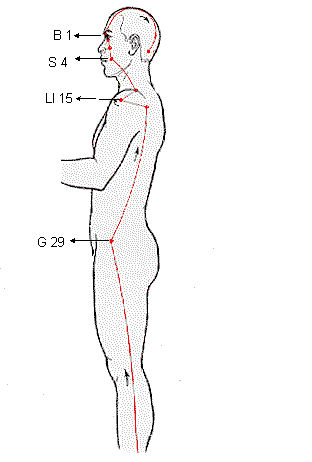
Functions (YANG QIAO MAI):
Creative functions:
— reunites YIN and YANG (after having been separated by both WEI MAI's) ij
the sense of entrance of YANG into YIN.
— man 'taking root' in the cosmos: where life comes into existence: the root in
the earth: point of departure and mobilization of any creative actikn (cf. B 62/SHEN MAI). In the ckurse of life these creative actions take a new turn at the 'gate of the hips' (G 29) and the 'gate of the shoulders' (GV 10).
Regulative functions:
— more concrete: 'rooting' of man in the 'YANG', viz. the outside world,
earth as the residence, society, social life, occupation, marriage, home.
— all cyclic changes in time and control of tha YANG times, e.g. day versus
nicht; regulates the rhythm of sleaping and being awake.
— mobihizes the YANG towards the YIN.
Symptomatology (YANG QIAO MAI):
— sleeping disorders; tiredness in the morning (has a slow start); stiffness after
rest.
— wandering pain: fleeting pain in the muscles and joints: lumbago, sciatica,
pain in
the back, pain in the neck (YANG stagnation); stiffness both physical and psychological; complaints worse during the day, better during the night.
— headache, intracranial congestion: plethora, CVA, aphasia, paresis;
ophthalmic migraine (GV 18/Qiangjian); conjunctivitis, red eye, ailments of the inner corner of the eye; blepharospasm (spasm of the orbicular muscle of the eyelid) and other kinds of tics.
— purulent skin diseases (acne, abscess) and psoriasis.
— general characteristics of a patient with YANG QIAO MAI complaints: rigidity
in all aspects; YANG symptoms superficially; volatile nature: patients are not at ease, often change profession, principles, several marriages or relationships (poor 'rooting' in their family); obsessions (due to stagnation of energy in the head: G 2/Tinghui, GV 16/Fengfu).
Principal symptoms (YANG QIAO MAI):
asthenia - in the morning
difficulty in getting started; stiffness.
back - stiff
behavioral disorders
not at ease, volatile, quickly changing opinion, profession, religion; poor 'rooting' in their family: several marriages or
relationships.
eye - pain
e.g. recurring conjunctivitis; prickling; dry.
eye - red
especially the inner corner of the eye.
face - pain
trigeminal neuralgia.
face - red
superficial YANG symptoms, plethora, congestion in the head.
headache
YANG does not reunite with the YIN.
headache - occipital
hemiplegia after CVA.
hot flushes
insomnia due to the non entrance of YANG (WEI QI) into YIN.
joint - stiff
superficial, fluctuating pain; characteristic stiffness (both literally and figuratively).
leg - pain - posterior
more of the YANG stagnation type.
muscle - stiff
neck - stiff
neck - tension
shoulder - pain
SI 10: 'gate of the shoulder' (cf. YANG QIAO MAI).
skin - acne
purulent skin disorders.
skin - red
prone to suppuration (formation or discharge of pus).
Secondary symptoms (YANG QIAO MAI):
apoplexy after CVA (cerebrovascular accident).
backache - dorsal
related to movement, initiating actions, etc...
backache - lumbar
eyelids - blinking
blepharospasm (spasm of the orbicular muscle of the eyelid).
eyelids - do not close
face - tics
stagnation of YANG.
head - warm
headache - intracranial (congestive)
intracranial congestion.
headache - lateral
e.g. ophtalmic migraine.
headache - migraine
pain radiates from the inner corner of the eye (K).
hip - pain
G 29: 'gate of the hip' (cf. YANG QIAO MAI).
hip - stiff
insomnia - can not fall asleep
due to the non entrance of YANG (WEI QI) into YIN.
jaw - pain
joint - pain
leg - pain - calf
menopause
muscle - pain
muscle - spasm
superficial, fluctuating pain.
muscle - tension
neck - pain
obsessions
stagnation of energy in the head.
shoulder - mobility disorders
skin - abscess
purulent skin disorders.
skin - eczema
psoriasis.
skin - psoriasis
sweating - forehead
Yang Wei Mai:
• character: Rules the Exterior. This channel is involved mostly with superficial and acute pathologies. Its relationship with points such as TW-5 and GB-20, is used to rationalize the selection of these points in the treatment of Exterior ailments. "Wei" means to "lash down" or "bind". The phrase "batten down the hatches" comes to mind. It is the ability to maintain strength in the face of sudden adversity that defines this channel.
• Master point: TW-5
• Couple point: GB-41
• Xi Cleft Accumulation point: GB-35
• paired channel: Dai Mai (Girdle Vessel)
• functions:unites, reinforces and balances regulate Yang channel activity. Impacts mainly Wei and Qi.
• general symptoms: fever and chills; shivering; dyspnea; arthritis; pain due to rheumatism; lumbar pain; doubling over; skin problems
• Shi (Excess) symptoms: Shi (Excess) of the Yang channels; fever; headache with heat; symptoms worse during thunderstorms and weather changes; mumps
• Xu (Deficiency) symptoms: lack of body heat; loss of strength, especially during rainy or cold weather
• pathway: from UB-63, up the leg along the Gall Bladder channel, up the posteriolateral trunk, past the axilla posterior to the shoulder, up the neck, behind the ear, circling the ear anteriorly, reaching the forehead, doubling back over the head to end at GV-15.
• key points:
UB-63
GB-35
SI-10
TW-15
GB-21
St-8
GB-13, GB-14, GB-15, GB-16, GB-17, GB-18, GB-19, GB-20
GV-16
GV-15
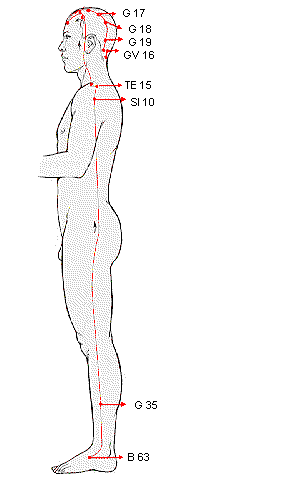
Therapy points (YANG WEI MAI):
- Key point: TE 5 (Waiguan).
- Key point of coupled meridian: G 41 (Zulinqi).
- Point of departure: B 63 (Jinmen).
- Xi (accumulation) point: G 35 (Jangjiao).
- Reunion points: G 29 (Juliao), SI 10 (Naoshu), TE 15 (Tianhao), G 21
(Jianjing), GV 15 (Yamen), GV 16 (Fengfu), G 13 (Benshen) up to G 20 (Fengchi).
Functions (YANG WEI MAI):
Creative functions
— the initiative of Heaven regarding the creative activities of man; these creative
actions are YANG compared to YIN WEI MAI: in other words we are talking about metaphysical, spiritual or reproductive functions. Hence the special actions of several of the points of YANG WEI MAI: B 63: 'gate of incarnation, of manifestation'.
— G 29: 'gate of hips': period of transformation on the spiritual PATH.
— SI 10: 'gate of the shoulders': period of transformation on the spiritual PATH.
— G 13: SHEN point of the upper cinnabar field.
— G 18: LING point: transcendence, spirituality.
— governs the processes which establish the differences between YIN and
YANG.
— is symbolically represented as a (vertical) rope in universe, to which all the
strands of the fundamental laws of life are connected.
Regulative functions
— links and harmonizes the energy movements in the YANG areas:
a) YANG areas in the body itself: head, upper part of the body, exterior, skin, muscles, loins, shoulders.
b) YANG areas regarded as all that surrounds us: environment, pathogenic energy (P.E.), climate, etc... YANG WEI pathology is often triggered by changes in weather conditions.
— harmonizes all the YANG phenomena of the body; if both YANG and YIN WEI
have been injured (blockage of YIN and YANG areas) the patient will have no contact with the environment or with himself: 'epilepsy and muteness'.
Symptoms (YANG WEI MAI):
— pain: generalized pain in the skin and muscles, pain in the joints, loins,
shoulder and neck, sensitive to thunderstorm, rain, snow, changes in weather conditions; superficial pain without a distinct pathway.
— fever: flu-like, fever alternating with cold shivers, headache, sensitive to wind,
cold and damp.
— obesity: in the case of fats blocked at the surface of the body.
— general characteristics of a person with YANG WEI MAI symptoms: dynamic
but uncontrolled people: total anarchy (eat, drink and be merry !), untidy room; fat people with a lot of energy; oversensitive: easily hurt; do not consult a physician for psychological problems but for pain.
Principal symptoms (YANG WEI MAI):
agitation
aversion - cold
especially to snow.
aversion - damp
aversion - thunder
body as a whole - pain
epilepsy
if YIN and YANG WEI are both disturbed (R).
fever
fever - chills
fever - intermittent
headache - lateral
temporal headache.
hip - pain
G 29: 'Gate of the hip' (refer to YANG WEI MAI) (K).
joint - pain
superficial pain, weather dependent, not following a distinct pathway.
muscle - pain
superficial pain, weather dependent, not following a distinct pathway.
neck - tension
shoulder - pain
SI 10: 'Gate of the shoulders' (refer to YANG WEI MAI) (K).
Secondary symptoms (YANG WEI MAI):
anger
aversion - wind
backache - lumbar
loins (YANG areas); no distinct pathway; one of the symptoms of flu.
behavioral disorders
oversensitive, stress, angry (both in words and behavior); like good living; enormous energy, but disorganized.
chills
cold pathogenic QI
sensitive to weather changes, especially to change of climate.
damp pathogenic QI
sensitive to change in weather, rain, snow, change of climate.
dyspnea
with lifted shoulders.
emotional disorders
great vulnerability in fat people who are very dynamic.
face - parotid gland (mumps)
also pain and swelling in the joints of especially hands and heels (S).
fear
feeling cold
flu due to external pathogenic QI.
four limbs - pain
headache
flu or headache (YANG areas).
hip - stiff
hysteria
mouth - dry
invasion of pathogenic QI in SHAO YANG.
obesity
fats and body fluids are blocked at the surface (they are not metabolized) (K).
skin - pain
and thickened (YANG area).
speech - disorders
aphonia, mutism and epilepsy if both YIN and YANG WEI are disturbed (R).
stress
thorax - pain - lateral
fleeting SHAO YANG pain.
vertigo
free circulation of YANG in the head (YANG area).
wind pathogenic QI
sensitive to weather changes, especially to change of climate.
Yin Qiao Mai:
• character: Rules the right side of the body. The translation of "qiao" as "motility" suggests flexibility and free movement. Yin qiao is the entire name because the right side of the body is Yin. As the emperor turned to his right at the end of the day, the sun lowered over the horizon and the eyes of the people became heavier as the hour of sleep approached. This is the ascent of Yin. The right side of the body is considered Yin for this reason, thus it is the Yin Qiao Mai, drawing Yin from its parent channel, the Kidney, that facilitates this transition from activity to quiescence. This channel regulates the Yin aspect of the movement of Qi and fluids, as indicated by its name. The alternate translation of "heel" for "qiao" merely indicates the location of the Bladder channel from which Yang Qiao originates. A Shi (Excess) condition of this channel implies a Xu (Deficiency) condition of the Yang Qiao Mai, and vice versa.
• Master point: Kd-6
• Couple point: Lu-7
• Xi Cleft Accumulation point: Kd-8
• paired channel: Ren Mai (Conception Vessel)
• functions: controls the opening and closing of the eyes; controls the ascent of fluids and descent of Qi; regulates muscular activity and fluid metabolism; moistens eyes; transports Yin
• general symptoms: somnolence; pharyngeal pain; flaccidity of the muscles of the lateral aspect of the lower extremity and spasm of the medial aspect
• Shi (Excess) symptoms: Xu (Deficiency) of Yang organs with Shi (Excess) of the Yin organs; complaints worse during the day; night epilepsy; unable to keep the eyes open; hypersomnia; narcolepsy; migraines; throat pain; difficulty breathing; Lower Warmer Shi (Excess); gynecological problems; waist pain; tightness of the medial leg; Bi syndromes of the joints
• Xu (Deficiency) symptoms: Shi (Excess) of the Yang channels; fever; headache with heat; symptoms worse during thunderstorms and weather changes; mumps [note: these are the same as the Shi (Excess) symptoms of the Yang Qiao Mai]
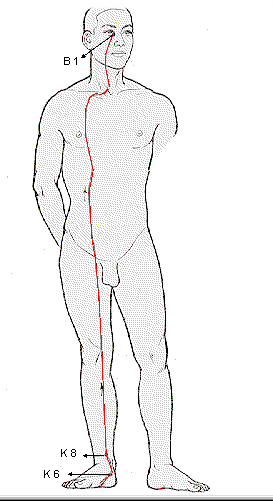
• pathway: from Kd-6, up the medial calf, into the genital area, internally up the abdomen and chest, externalizing at St-12, up anteriorly to St-9, past the medial cheek, terminating at UB-1
• key points:
Kd-6
Kd 8
UB-1
The Course of Yin Qiao Mai:
a) The Yin Qiao Mai, one of the branches of the Kidney Meridian of Zu Shao Yin,
starts from Rangu (K 2) in the centre of the heel, ascends along the medial aspect of the foot and ankle, passes Zhaohai (K 6) and meets Jiaoxin (K 8), its Xi-cleft point, 2 cun above the medial malleolus.
b) It then runs vertically along the posterior border of the medial aspect of the
thigh to the external genitalia, continuing to ascend along the abdomen and chest to the supraclavicular fossa.
c) It further runs upward, lateral to the laryngeal prominence in front of Renyin
(S 9), proceeds along the zygoma, reaches the inner canthus of the eye and connects with Jingming (B l).
d) From this point, it also communicates with the Small Intestine Meridian of
Shou Tai Yang, The Bladder Meridian of Zu Tai Yang, the Stomach Meridian of Zu Yang Ming and the Yang Qiao Meridian.
Functions (YIN QIAO MAI):
Creative functions
— reunites YIN and YANG (after having been separated by both WEI MAI's) in
the sense of entrance of YIN into YANG.
— slowing down or speeding up of creative activities with respect to time (e.g.
premature ejaculation, menses which come through with difficulty, retention of
the placenta).
— 'rooting' of man in the cosmos: where life comes into existence: the root in the
earth, but also LIGHT (K 6 / Zhaohai) and the WATER (ZSYi / K), origin and source of life.
Regulative functions
— more concrete: 'rooting' of man into 'YIN', viz. feeling at home in himself:
mental stability, self-acceptance.
— all cyclic changes in time and the governing of the YIN times: e.g.
— night versus day, second half of the menstrual cycle, pregnancy, coitus, birth,
etc...
— regulates sleeping / waking rhythm.
— mobilizes the YIN towards the YANG.
— 'the Body Fluids ascend via the pathway of YIN QIAO MAI' (chapter 28, LING
SHU).
Symptoms (YIN QIAO MAI):
— sleeping disorders: needs a lot of sleep (10 - 11 hours), or insomnia, difficulty
in falling asleep.
— pelvic complaints (obligatory symptom): dysmenorrhea, PMT, pain in
lower abdomen and hips, extending to the genitals, hypertrophy of the prostate, premature or late ejaculation, retention of the placenta, pain after childbirth, habitual miscarriage; dysuria, constipation...
— stiffness in back and limbs.
— edema, cold feet.
— headache (heavy, dull); eye complaints: dryness, impairment of vision,
redness especially in the inner canthus of the eye.
— spasm in the throat (false croup), mucus, 'lump' in the throat especially at
night or on rising.
— general characteristics of a patient with YIN QIAO MAI symptoms: lack of self-
confidence, needs to be reassured all the time, much need for affection (warmth, love), no 'rooting' in oneself, not steady (bad skiers !), anxious, sad, do not radiate, fear of unknown people; often female patients.
Principal symptoms (YIN QIAO MAI):
abdomen - pathology of the hypogastrium
all sorts of pelvic complaints: pain in lower abdomen extending to the genitals.
abortion
anxiety
back - stiff
and wandering pain.
behavioral disorders
no self-confidence; needs reassuring company; fear; lack of expression.
constipation
and other pelvic complaints due to stagnation of YIN.
depression
sadness, does not 'radiate'.
eye - pain
especially inner canthus of the eye.
fear
laryngeal spasm (false croup); does not like to be alone, lack of expression; fear of unknown people; no self-confidence.
heart - palpitations
tachycardia; extrasystole; psychosomatic.
hypochondria
insomnia
or needs a lot of sleep (10 - 11 hours).
irritability
leg - pain - medial
medial aspect.
menses - pain
all sorts of gynecological and menstrual disorders.
premenstrual tension
sexual function - disorders
sexual asthenia; no erection or erection without reason; not interested in sex.
sleepiness
or needs a lot of sleep (10 - 11 hours).
suffocated feeling
laryngeal spasm (false croup).
Secondary symptoms (YIN QIAO MAI):
abdomen - pain
all kinds of pelvic complaints.
abdomen - spasm of the colon
abdominal spasms.
asthenia
needs a lot of sleep; difficulty in getting started.
asthenia - in the morning
backache - lumbar related to movement; stiff, especially at night; radiation towards hip and genitals.
chills
emotional disorders
psychosomatic.
eye - dry due to insufficient ascent of Body Fluids.
eye - red
especially inner canthus of the eye.
eyelids - do not open and/or sleepiness.
feeling cold
much need for affection.
foot - pain
in the heel.
head - heavy
YIN pathology, dull, inertia.
headache
psychosomatic.
hypotension
leg - restless
leg - weakness
cannot stand on their own feet (psychological as well as physical); lack of stability.
menses - delayed period
muscle - stiff
neurasthenia
no 'rooting' in oneself; all kinds of psychosomatic complaints.
prostatitis
hypertrophy and pelvic complaints due to stagnation of YIN.
throat - pain
obstruction due to phlegm; 'lump' in the throat; spasm of the larynx.
throat - swelling
obstruction due to phlegm; 'lump' in the throat; spasm of the larynx.
Vertigo psychosomatic.
yawning
Yin Wei Mai:
• character: carries Zong (Ancestral) Qi and functions on the deepest level of Yin, thus ruling the Interior. It links the Yin of the body, maintaining tranquility. Symptoms often involve the Heart and Shen, with cardiac discomfort and emotional disruption common. While the Ren Mai nourishes Yin channels, Yin Wei Mai serves more of a regulatory function.
• Master point: PC-6
• Couple point: Sp-4
• Xi Cleft Accumulation point: Kd-9
• paired channel: Chong Mai (Penetrating Vessel)
• functions: connects, reinforces, balances and regulates the Yin channels. Impacts mainly Yin and Xue (Blood)
• general symptoms: weakness; patient easily angered; groans with pain; chest pain, esp. pains in the heart; distension in the hypochondriac region; achiness in the waist; genital pain; swelling of the perineum
• Shi (Excess) symptoms: deep pulses stronger than superficial ones; delirium; nightmares; weakness of homolateral upper extremity and contralateral lower extremity; dyspnea; chest oppression
• Xu (Deficiency) symptoms: deep pulses weaker than superficial ones; depression; timidity; fear; nervous laughter; pain in the homolateral upper extremity and the contralateral lower extremity; hypotension; hypothyroidism; impotence; rectal prolapse
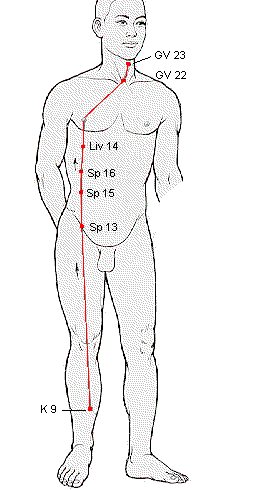
• pathway: from Kd-9, up the medial calf, crossing the abdomen along the Spleen channel, moving medially from Lv-14, ascending the chest to end at CV-23, at the throat.
• key points:
Kd-9
Sp-12
Sp-13
Sp-15
Sp-16
Lv-14
CV 22
CV-23
The Course of Yin Wei Mai:
a) The Yin Wei Mai connects to all the Yin meridians of both hand and foot, as
well as to the Ren Mai.
b) It starts from the medial side of the leg at Zhubin (K 9), its Xi-cleft point, and
ascends along the medial aspect of the thigh to the abdomen, communicates with the Spleen Meridian of Zu Tai Yin.
c) Passing through Chongmen (Sp 12), Fushe (Sp 13), Daheng (Sp 14) and Fuai
(Sp 16), it meets the Liver Meridian of Zu Jueyin at Qimen (Liv 14), ascends along the chest and communicates with the Ren Mai at Tiantu (CV 22) and Lianquan (CV 23).
Functions (YIN WEI MAI):
Creative functions
— the initiative of Heaven with respect to the creative activities of man; the
answer to this initiative is the task of the QIAO: the realization, organized by the Earth.
— governs the processes which separate YIN and YANG; reuniting them is
organized by the QIAO.
— is represented symbolically by a (vertical) rope in the Universe to which all the
strands of fundamental laws of life are linked.
Regulative functions
— governs all energy movement in the YIN areas: the interior (thorax, abdomen,
endocranium) and blood circulation.
— unites all YIN aspects of the organism, independently of the YANG.
— harmonizes all YIN channels which come together in REN MAI.
— controls the distribution of QI and XUE in the pelvis.
— includes the pathology of the interior, where pain originates due to deep
accumulation of YIN.
Symptoms (YIN WEI MAI):
pain in the heart region, together with emotional disorders:
— pseudoangina, hyperventilation (Costa's syndrome), spasmophilia, angina
pectoris, thoracic pain, etc...
— This pain differs according to the affected segment of YIN WEI MAI:
TAI YIN: painful prickling and oppressive feeling.
JUE YIN: angina pectoris and paleness.
SHAO YIN: stabbing, piercing pain with syncope.
blood disorders:
— obstruction of XUE (in envelope of the Heart or pelvis) or deficient XUE.
— headache and migraine; mostly chronic headache, atypically.
— pelvic complaints, menstrual disorders (especially dysmenorrhea and
metrorrhagia due to accumulation of QI and XUE), spontaneous miscarriage.
general characteristics of a patient with YIN WEI MAI symptoms:
— either: great energy, but uncontrolled: disorganized, excitement, moody, noisy,
logorrhea, hysteria, tongue sticks out of the mouth.
— or: fearful - depressive, takes everything very seriously, quickly crying, 'what
happens to someone else will happen to me', no discernment in emotions, 'keeps on about his past', remorse, discontented.
Principal symptoms (YIN WEI MAI):
abdomen - pain
YIN accumulation in the pelvis.
anxiety
behavioral disorders
cf. YIN QIAO MAI: general symptoms.
depression
'takes everything very seriously, quickly crying'.
dyspnea
dyspnea - rapid breathing
fear
fearful and depressed.
headache
chronic, varies.
heart - pain
or in the heart region (YIN area, heart-'Centre').
heart - palpitations together with fear or emotional disorders.
menses - pain
dysmenorrhea due to obstruction of QI and XUE in the pelvis.
obsessions
thorax - pain - anterior
all kinds of complaints in the heart region.
Secondary symptoms (YIN WEI MAI):
abdomen - pain - stomach
abdomen - pathology of the hypogastrium
pelvic complaints (harmonizing of YIN areas and of XUE).
abdomen - spasm
YIN accumulation in the pelvis.
agitation
very dynamic, but uncontrolled.
dyspnea - asthma chronic
emotional disorders
oversensitive, takes everything seriously.
headache - intracranial (congestive) YIN area.
headache - lateral
migraine, atypical.
headache - migraine
obstruction of the free circulation of QI and XUE (endocranium) (K).
hypotension
hysteria
excited, logorrhea.
leg - arteriovenous insufficiency
madness
menses - heavy period
metrorrhagia due to obstruction of QI and XUE in the pelvis.
muscle - tension
speech - logorrhea
stress
suffocated feeling
spasmophilia.
syncope
disorders of the blood and blood vessels.
temperamental disorders
very changeable in temper, unstable character.
thorax - fullness
YIN accumulation in YIN areas.
thyroid gland - hyperthyroidism
thyroid gland - struma